


What Is Lift Modernisation and When Is It Needed?
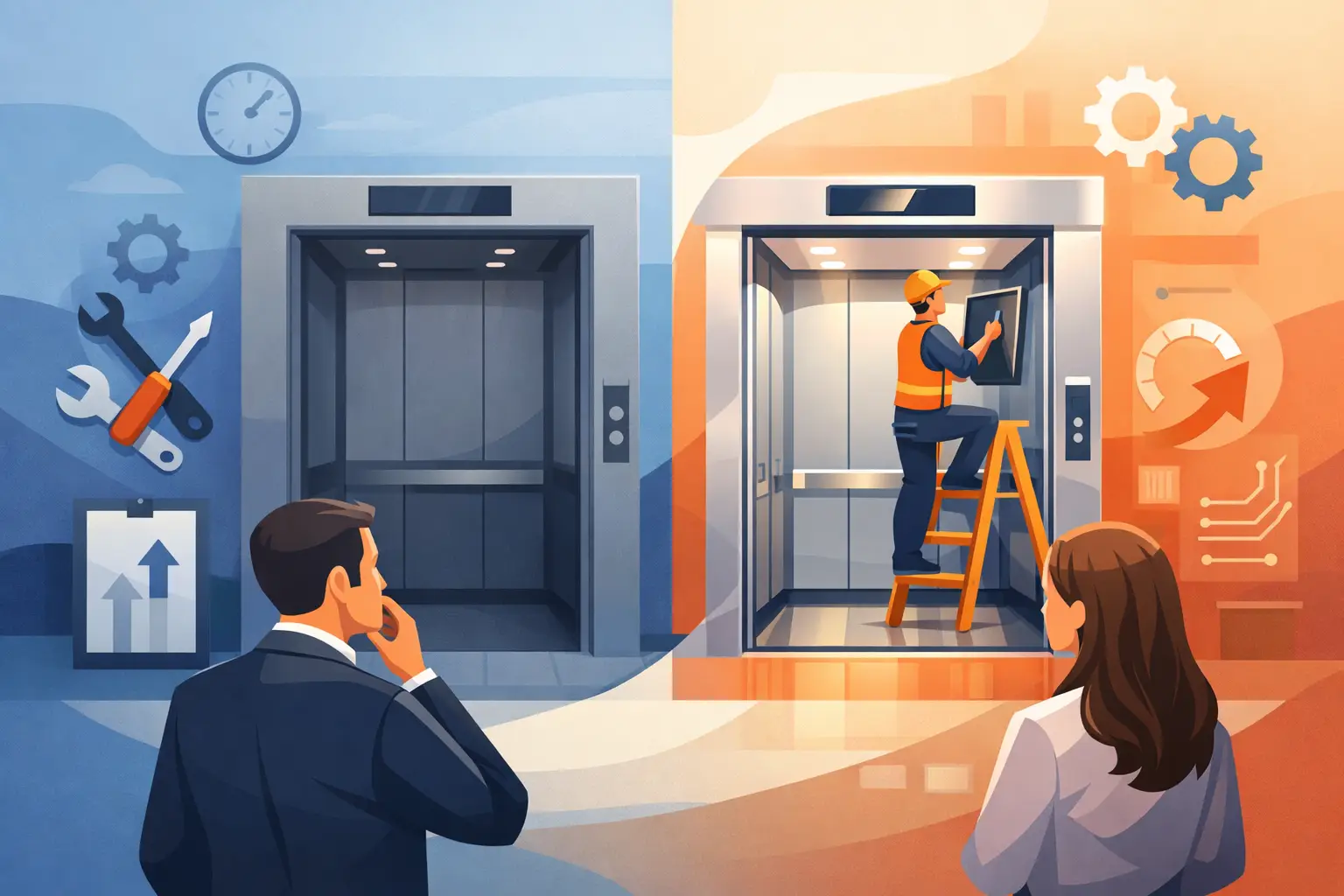
A lift that still moves between floors is not necessarily performing as it should. Slow travel, frequent call-backs, difficult-to-source parts and poor levelling can all affect safety, tenant confidence and building operations. So, what is lift modernisation? It is the planned upgrade of selected lift systems to improve performance, safety, reliability and usability without automatically replacing the entire lift.
For property owners and facility managers, modernisation is often the practical middle ground between ongoing reactive repairs and a full lift replacement. It extends the useful life of an existing asset while addressing the components that are causing operational risk or no longer meet the building’s needs.
What is lift modernisation?
Lift modernisation involves replacing, upgrading or reconfiguring ageing lift equipment. The work may focus on the controller, drive system, door equipment, cab finishes, safety devices or communications system. In some projects, several of these elements are upgraded together as part of a staged plan.
A modernisation project is tailored to the condition of the lift, its duty cycle and the requirements of the building. A residential building with one passenger lift has different priorities from a hospital, retail centre, warehouse or aged care facility where lift availability has a direct impact on daily operations.
The goal is not simply to make the lift look newer. A well-scoped upgrade should reduce breakdowns, improve ride quality, support compliance obligations and make future maintenance more predictable.
Why older lifts become harder to manage
Lift equipment is made up of mechanical, electrical and electronic systems that work together every day. Over time, components wear, technology becomes obsolete and replacement parts can become more difficult or expensive to obtain. A lift may continue operating, but its reliability can decline gradually until call-outs become routine.
Common signs that a lift should be assessed for modernisation include repeated door faults, inconsistent floor levelling, long wait times, noisy operation, frequent passenger entrapments and an outdated controller with limited diagnostic capability. Rising repair costs are another clear indicator, particularly when repairs are treating the same fault rather than resolving the cause.
Older lifts can also create avoidable risks for building managers. If a critical component fails and is no longer readily available, downtime may extend well beyond a standard repair visit. For a building with a single lift, that can affect accessibility, goods movement, residents, staff and visitors all at once.
What can be upgraded during lift modernisation?
The scope of work depends on the lift’s age, condition and original design. Some lifts need a focused upgrade to improve reliability, while others benefit from a broader package that brings several systems up to date.
A controller upgrade is one of the most common improvements. The controller is effectively the lift’s operating brain. Modern controllers provide better fault monitoring, more accurate operation and improved support for maintenance technicians. They can also make it easier to identify emerging issues before they lead to a breakdown.
Door equipment is another priority area. Lift doors operate more frequently than many other components and are a common source of faults. Upgrading door operators, tracks, rollers and safety devices can improve opening and closing performance, reduce nuisance faults and support safer passenger movement.
Drive modernisation may improve travel comfort and energy use, especially where an older system is inefficient or difficult to service. Depending on the lift configuration, this can involve upgrading the drive unit and associated controls to deliver smoother acceleration, more accurate stopping and quieter operation.
Cab upgrades improve the passenger experience but should not be treated as cosmetic alone. New lighting, handrails, flooring, car operating panels, indicators and emergency communication equipment can improve visibility, accessibility and usability. In commercial and residential buildings, a refreshed cab can also better reflect the standard of the property.
Other upgrades may include landing call buttons and indicators, levelling systems, emergency lighting, lift phones and safety-related equipment. The right combination should be determined through a site assessment rather than a one-size-fits-all package.
Modernisation versus full lift replacement
Lift modernisation is not always the right answer. If the lift shaft, guide rails, car frame, suspension system or core machinery are in poor condition, a full replacement may provide better long-term value. The same applies where the existing lift cannot reasonably meet the required capacity, speed or accessibility needs of the building.
However, full replacement can involve greater cost, longer disruption and more extensive building works. Modernisation can be a cost-effective option where the lift’s main structure remains sound and the reliability issues are concentrated in ageing electrical, control or door systems.
The decision should be based on the lift’s condition, repair history, parts availability and the building’s future plans. For example, a building scheduled for redevelopment may require a different investment approach from one expected to operate for decades with the same lift infrastructure.
A professional condition assessment helps clarify whether targeted modernisation, a staged upgrade or replacement is the most sensible path. It should consider more than the immediate fault list. It should also account for passenger demand, operating hours, access requirements, risk exposure and expected lifecycle costs.
How a lift modernisation project is planned
Good planning is essential because lifts are critical building services. Before work begins, the contractor should inspect the existing equipment, confirm the scope and identify any site-specific constraints. This includes access to the machine room or control space, shaft conditions, building operating hours and the need to keep occupants informed.
For many buildings, work can be scheduled to minimise disruption. In a multi-lift property, upgrades may be staged so that another lift remains available where practical. In a single-lift building, the project team should clearly communicate expected downtime and put appropriate access arrangements in place for residents, staff and visitors.
The installation phase may involve removing obsolete equipment, fitting new components, carrying out wiring and control work, then testing the completed system. Thorough commissioning matters. A lift should be tested under normal operating conditions and checked for door performance, floor accuracy, safety functions and communication systems before it returns to service.
Modernisation works should also be considered alongside applicable Australian standards, building requirements and the specific needs of the site. A capable lift provider will explain what is included, what may require additional works and how the upgraded equipment will be supported after handover.
The operational benefits for building owners
The most valuable outcome of lift modernisation is often reliability. Fewer faults and faster diagnostics can reduce unplanned downtime, which is particularly important in buildings with high passenger volumes or only one lift.
Modern equipment can also improve maintenance outcomes. Technicians can work with current components, clearer fault information and supported parts supply, helping to make planned maintenance more effective. That does not mean a modernised lift will never require repairs, but it can reduce the uncertainty that comes with obsolete equipment.
For tenants, residents and visitors, the benefits are more immediate: smoother rides, dependable doors, better lighting, clearer controls and greater confidence that the lift will be available when needed. For property managers, this can mean fewer complaints and a more professional building experience.
Energy efficiency may also improve, although the result depends on the existing system and the selected upgrades. It is worth considering energy use as part of the decision, but safety, reliability and serviceability should remain the primary priorities.
Choosing the right modernisation partner
A lift modernisation project should be delivered by technicians who understand both the existing equipment and the practical realities of keeping a building operating. The cheapest scope is not always the most cost-effective if it leaves major reliability issues unresolved or relies on components with limited long-term support.
Look for a provider that can assess the lift properly, explain the options in plain language and support the equipment after installation through structured maintenance and responsive repairs. Clear project communication is equally important, especially for occupied residential, healthcare, education and commercial sites.
Skyrise Elevators can assess ageing lift equipment and recommend a modernisation scope that suits your building, budget and operational priorities. The right time to investigate an upgrade is before recurring faults become extended downtime, not after passengers and building operations are already affected.